Eat more and consume fewer calories.
The End of the Diet Debate
For decades, people have argued about which diet works best. Low-fat or low-carb? Paleo or vegan? Mediterranean or something else entirely? A massive analysis looked at 40 research studies with over 35,000 adults. Researchers compared seven popular diets head-to-head. One pulled away from the pack dramatically. The Mediterranean diet cut deaths from heart disease by 45%. It cut stroke risk by 35%. It slashed heart attack risk by 52%. In Canada, cardiovascular disease kills nearly 60,000 people every year.
Biological Food
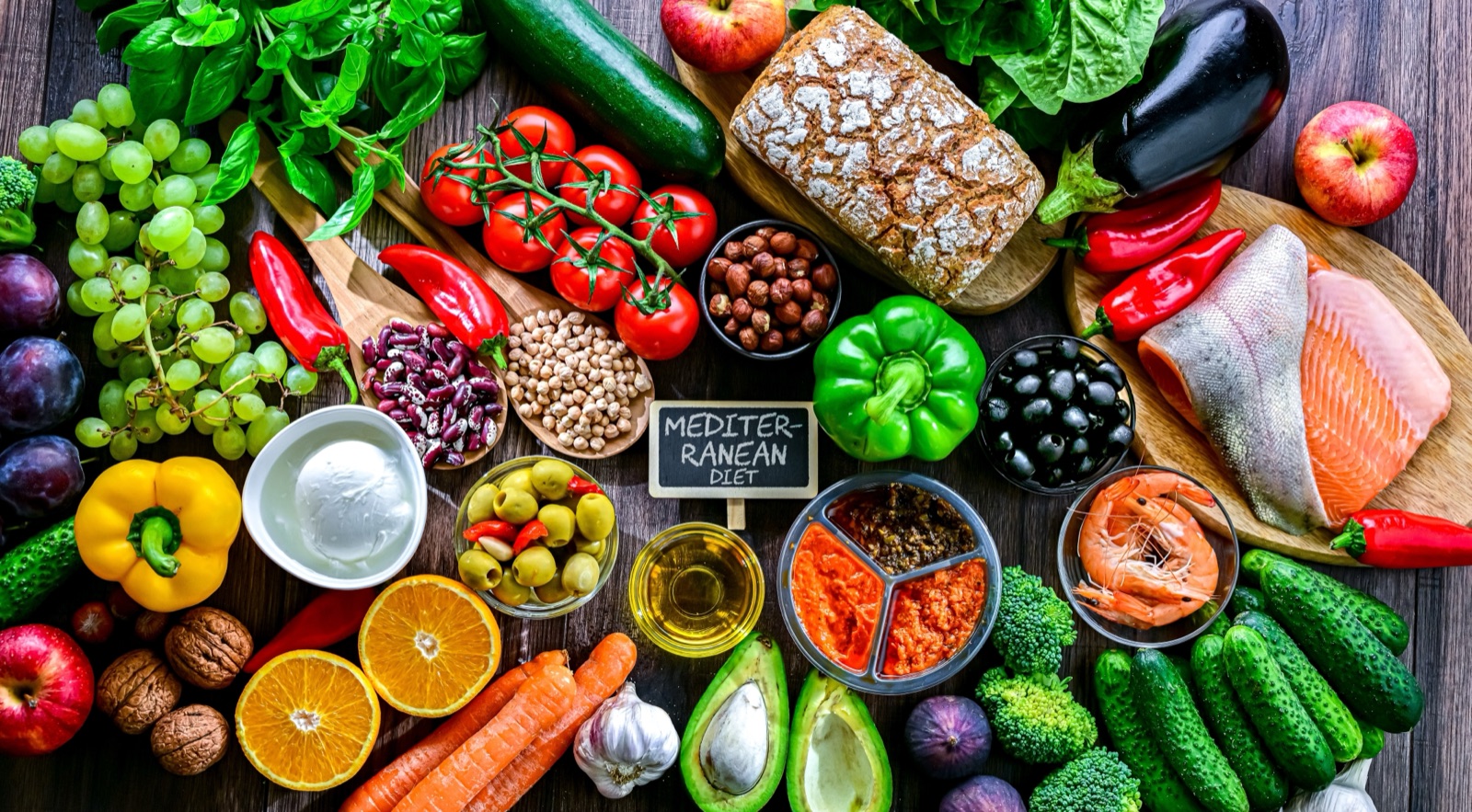
The Mediterranean diet wins because what you’re actually eating works with your biology instead of against it. The Mediterranean diet is simple: olive oil, fish, vegetables, fruit, legumes (beans, lentils, chickpeas), nuts, and whole grains. Minimal red meat. Minimal processed food. That’s it.
Why This Combo Wins
Unsaturated fats matter. The Mediterranean diet gets most of its fat from olive oil and fish. These are sources of healthy fats (monounsaturated and polyunsaturated fats). Unlike saturated fats, these don’t clog your arteries.
Omega-3 fatty acids (the healthy fats in fish) reduce inflammation in your body. They lower triglycerides (blood fats that increase heart disease risk). They decrease your clotting risk.
Fibre does more than you think. Almost every Mediterranean meal is loaded with fibre from vegetables, legumes, and whole grains. Fibre isn’t just about digestion (though it helps there too). It steadies your blood sugar. It feeds your good gut bacteria. It helps you feel full longer. It actually removes cholesterol from your bloodstream.
You’re not eating junk. A huge reason the Mediterranean diet works is what it excludes. You’re not eating ultra-processed foods (foods made with industrial ingredients and designed to be hyper-tasty). You’re not consuming hidden sodium, added sugars, and additives that your body has to work overtime to process.
The Fibre Factor
Starving for fibre. 90% of Canadian women and 97% of Canadian men don’t get enough fibre. We’re aiming for 25-38 grams daily. Most of us stop at around 14 grams. That’s less than half. The Mediterranean diet gets you there naturally.
Fibre for your gut. Your gut bacteria need fibre to thrive. When you don’t feed them enough, they actually start eating your gut lining — literally. This creates inflammation, which scientists now recognize as a root cause of heart disease, type 2 diabetes, and even some cancers.
Fibre for sugar. Fibre stabilizes your blood sugar. When blood sugar is stable, you have fewer cravings. You have more energy. You accumulate less fat around your organs.
Fibre for cholesterol. Fibre lowers LDL cholesterol (the dangerous kind that clogs arteries). It does this by literally binding to cholesterol in your digestive tract and carrying it out of your body.
How to increase your fibre without the bloating:
- Add fibre gradually, over 2-3 weeks.
- Drink more water (fibre without water causes constipation).
- Mix sources (don’t suddenly eat 30 grams of wheat bran and expect comfort).
- Distribute it throughout the day rather than loading it into one meal.
How to Feel Full on Less
People who eat whole foods eat 50% more food by weight. Same appetites. But they consume 330 fewer calories per day without trying. How? Calorie density. Ultra-processed foods pack calories into small packages. A muffin has 400 or more calories. The same calories in whole foods might fill your entire lunch plate: a big salad with olive oil, grilled fish, a piece of bread, and berries.
Your stomach sends fullness signals to your brain based on volume and weight. This is why a Mediterranean lunch makes you feel full. A processed lunch of similar calories leaves you hungry two hours later. It’s not willpower. It’s biology.
What You Eat
Every meal should include:
- Vegetables (aim for a big handful or more per meal)
- A protein source (fish at least twice a week, legumes 3 times, poultry 2 times, red meat occasionally)
- A fat source (olive oil, nuts, or seeds)
- A whole grain (if you want it)
Daily goals:
- 25-38 grams of fibre (from vegetables, fruits, legumes, whole grains)
- At least 2 servings of fish per week, with emphasis on fatty fish like salmon, mackerel, and sardines
- A small handful of nuts most days
- At least 3 tablespoons of olive oil daily (in cooking, dressings, or drizzling)
- Plenty of vegetables — there’s no “too much” here
- Fruits for dessert and snacks
- Legumes (beans, lentils, chickpeas) 3 times per week
- Whole grains over refined grains
- Limited sweets and processed foods
What meals look like:
- Breakfast: Oatmeal with berries and nuts.
- Lunch: A salad with leafy greens, chickpeas, tomatoes, cucumber, olive oil dressing, and whole-grain bread.
- Dinner: Grilled salmon, roasted vegetables, and quinoa.
- Snacks: Nuts, fruit, or olives.
Dodge Food Additives
People with higher preservative intake had a 47% increase in diabetes incidence. Nitrites (used in cured meats), sorbates (used as preservatives), and sulfites (used in dried foods) are linked to increased cancer risks. Preservatives are often listed as: sodium nitrite, potassium sorbate, sodium benzoate, sulfites, BHA, and BHT. If you see these, you’re eating something your grandmother wouldn’t have recognized as food. Also, “natural flavours” can hide a multitude of sins. The Mediterranean approach is to eat foods that taste like themselves.
Biology Beats Willpower
The reason the Mediterranean diet works where so many others fail is that it works with your biology. You eat real food. You feel full. Your gut bacteria are happy. Your blood sugar is stable. Your brain isn’t being chemically hijacked by ultra-processed foods. After a while, it becomes normal. You’re not “on a diet.” You’re just eating food that makes you feel good.
Powerful Results
This way of eating has benefits for your heart. Your blood pressure drops. Your cholesterol improves. Your inflammation falls. Your risk of heart attack and stroke plummets. The Mediterranean diet has been studied more rigorously than any other eating pattern. A big study in Spain was halted early because the benefits were so obvious. They felt it was unethical to keep some participants on the lower-fat diet.
Start Your Path to Success
Buy olive oil. Grill fish. Fill half your plate with vegetables. Eat nuts and feel satisfied. Drink water and feel nourished. Your body knows what to do with real food. The Mediterranean diet isn’t trendy. It’s enduring because it works. Your future self will thank you for the food you eat today.