Cartilage Is Key
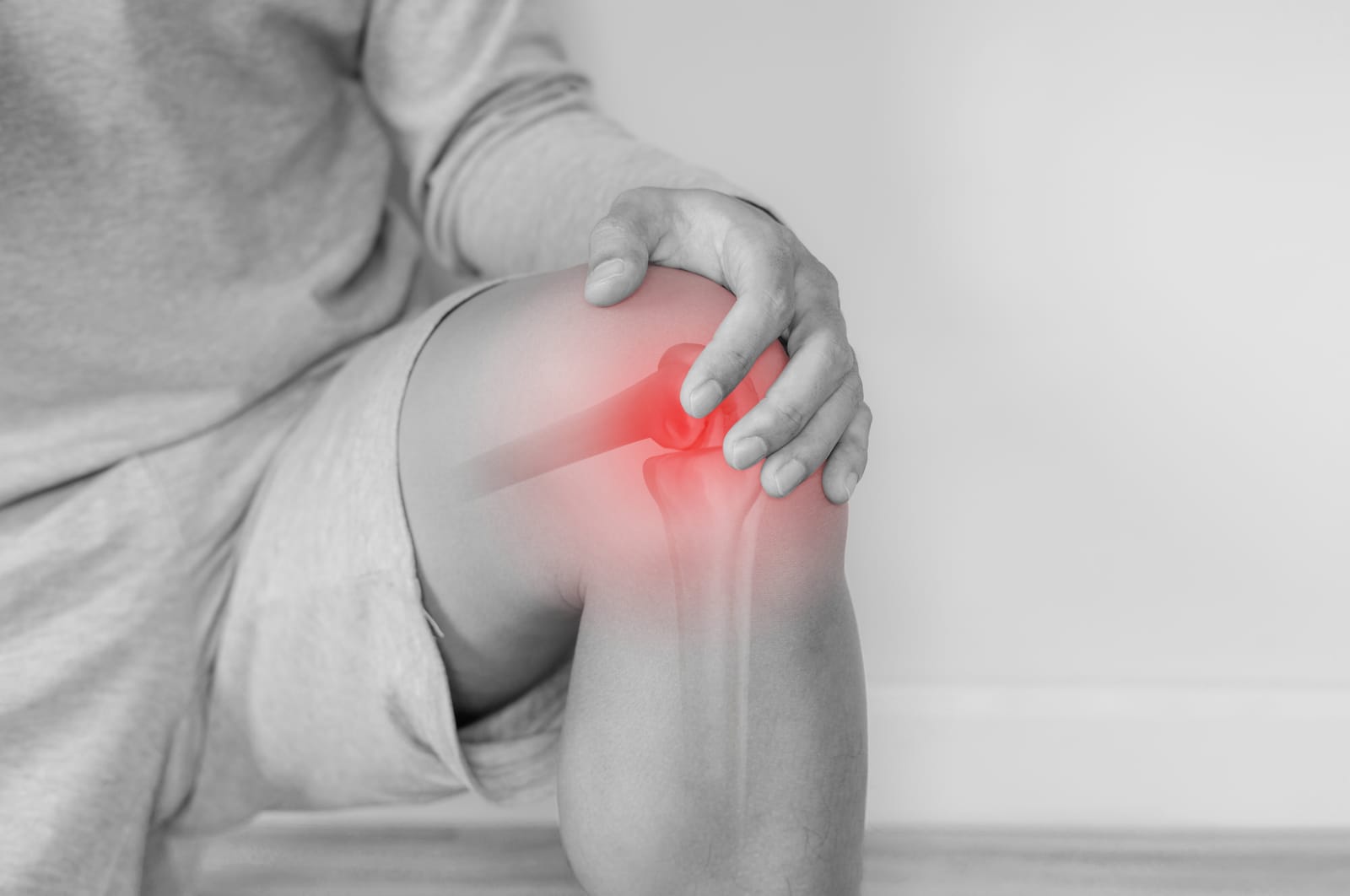
Knee pain happens in many ways. As we age, a lot of knee pain is due to the deterioration of cartilage. Cartilage is the shock absorber between bones. It helps the bones slide over each other as the joint bends. The end of each bone at the knee has cartilage. There are also two half-moons of cartilage between the bones of the knee that act like shock absorbers. This half-moon is called the meniscus.
Cartilage Damage
A tear in the cartilage half-moon, the meniscus, can result from a quick twist or impact. A small tear will often heal on its own, at least to a certain extent. A large tear may require surgery to sew it up. In general, cartilage doesn’t heal well because it takes in nutrients slowly.
Catching on Cartilage
Cartilage can also break down and break apart and result in free-floating bits of cartilage that irritate the joint. Sometimes this causes the joint to ‘catch,’ or sometimes the knee ‘gives out’ suddenly.
Pain of Misalignment
Knee pain can also be caused by joint misalignment. When our leg muscles get unbalanced by either one side getting shorter than the other, it can pull the knee out of alignment, causing pain.
Rest from Overuse Pain
Overuse can cause inflammation of the tendons that connect the muscle around the knee to the joint. If you have been inactive for a while and suddenly do a lot of activity, it can cause the tendons to swell up and cause pain. It’s also possible to sprain your knee. Recovery from sprains or tendon inflammation involves rest and ice. As we age, that rest period is a bit longer. A ligament tear may require surgery.
Knees Need Movement
We may feel that the best thing for arthritis is to rest the knees and avoid movement as much as possible. While it is true that very high amounts of pounding activities can make arthritis worse, movement is essential to joint health.
Cartilage as Water Balloon
Unlike most tissue in your body, cartilage has no blood vessels or nerves. It is made mainly of collagen and unique proteins that hold water. In fact, cartilage is mostly water. Water in cartilage serves as the major cushion factor. Cartilage is a very stiff water balloon. Water in cartilage also serves to move nutrients inside the cartilage and to lubricate the joint.
Healthy Joints Move
Joints need movement to take in nutrients. Joint cartilage has no blood supply, so it takes in nutrients required to rebuild from the fluid that surrounds joints. To take in nutrients to maintain health, cartilage has to be squeezed and released. This squeezing and releasing pushes out waste and pulls in nutrients that allow the cartilage to rebuild. Joints have to move to stay alive.
Immobile Joints Degrade
An immobile joint causes the cartilage to degrade. If a joint is held stationary, say in a cast for 8 weeks, the cartilage gets noticeably thinner.
Move Within Limits
Avoid high-impact repetitive exercises like very long distance running. Also, any extra body weight causes additional pressure on the knees. Try to avoid gaining weight. Being overweight damages the knee because every movement bears the stress of the excess weight. This small, repeated stress wears at the joint thousands of times a day. This extra repeated stress damages the joint.
Footwear is Foundational
Good shoes are essential. Wear shoes that provide good arch support. If your feet are not properly supported, your foot can roll inwards, which stresses your ankles and knees.
Exercise Does Do Squat
To prevent joint misalignment, try to strengthen all the leg muscles by doing leg exercises like squats and lunges without weights. When doing squats, take a wide stance and make sure to keep your shins vertical, not angled in. Don’t allow them to tip in to each other. Keep your back straight. Don’t round your back. Start by pushing your butt back and down. Go as low as you feel comfortable doing. Putting your arms straight out in front can help with form and balance. Squat and repeat. If a squat is too difficult, use a chair and slowly sit down and get up, but focus on good form.
Lift Your Legs
Sitting-straight-leg lifts are also helpful. Sit on a mat on the floor and bend one leg by raising your knee while keeping your foot on the floor. Lift the other leg, the straight one, off the floor and hold for 10 seconds.
Kick for Your Butt
It’s also essential to get a stronger butt. A weak butt can make your legs fall out of alignment. Donkey kicks are simple exercises that strengthen your butt. To do these, get on the floor on all fours like a donkey. Take one leg, bend only at the hip and raise your leg like a donkey kicking. Keep your knee fixed at 90 degrees. Your raised foot should be parallel to the ceiling at the end of the kick. Repeat 5 times for each leg.
Flex ‘n’ Stretch
Stretching and range-of-motion exercises can also help. Move the joint through its full range of motion several times every day. Avoid sitting for a long time.
Make Knee Pain Bearable
More activity can actually make your knee pain go away. Sitting around is probably the worst thing you can do for your knees. If you have an injury, you have to rest for a while, but once healed, get and stay active. Walking and doing some leg exercises can help you avoid knee pain or make your knee pain bearable.