We hear lots of preaching about exercise, but what’s the real truth about exercise? Does it make a difference? How does it work? And what are the best exercises? Exercise does help, but in some cases the benefits are overstated. Let’s take a closer look.
Exercise makes us feel better
Exercise can build endurance. If you train your body, increasing your stamina with an exercise program, you will have the ability to work longer. You could, for example, sail through and hour or two of intense gardening.
Exercise can also give you more strength. If you improve your strength, you might be able to pop out of a chair with ease rather than struggling to stand. And the right kind of exercise can improve flexibility. Many injuries occur when we’re not flexible.
Exercise also gives you an energy boost. Instead of dragging through the day, you could be bristling with energy. Evidence suggests that exercise can add years to your life. But more than just tacking on some years, exercise improves your life experience.
Exercise also helps satisfy our craving for accomplishment. We are designed to achieve, and when you exercise, you experience the satisfaction of a job well done. And If you’re are lucky enough to have a husband or wife, exercise can help in the bedroom as well. Finally, within five minutes after exercise, your mood improves. And exercise boosts your ability to handle stress. In short, exercise makes you happy.
Kinds of exercise: endurance
Exercises that focus on endurance are called aerobic exercise or ‘cardio’ because of their benefits for heart health. Running is the most common endurance exercise. It requires little skill or equipment but on the down side, it can be hard on joints. Bike riding is another option, but riding fast enough to get the endurance benefit can be dangerous.
Then there are the cardio machines like exercise bikes, elliptical machines, stair climbers, etc. They can be a good option to get a simple workout without too much risk. The downside is you either have to spend the money to buy one, or pay a membership fee at a gym.
Kinds of exercise: walking
Walking is easy, enjoyable, and effective. No equipment is needed to begin walking and you don’t have to be an Olympic athlete. You can work it into your daily routine. When you run errands, give yourself a little extra time and park at the far end of the lot to walk more.
Walking is enjoyable. If you walk alone, try walking in natural soundings - a park or somewhere with trees. Take time to notice the plants and wildlife. Being in nature lowers the stress chemicals in your body.
Walking with a partner makes it easier to have a meaningful conversation. Walking side-by-side builds a closer relationship. And the next time friends are over, suggest a group walk. Or plan to explore a new area. You can even build a picnic into a walk.
Walking 30 minutes a day improves health outcomes and adds years to your life. It is a uniquely effective exercise because humans are tailored to walk. Our whole skeleton and muscle systems are geared for walking.
Kinds of exercise: building strength
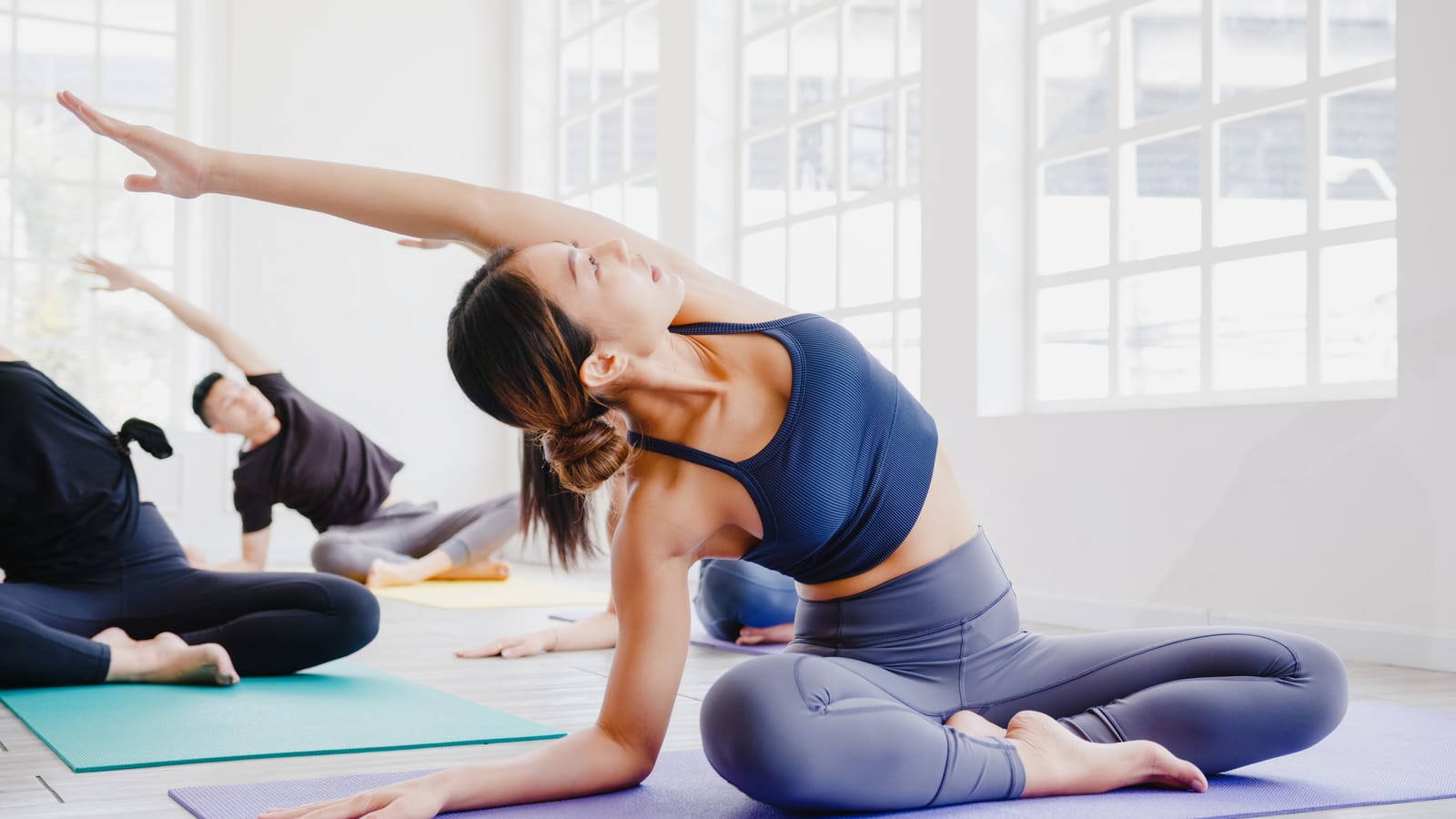
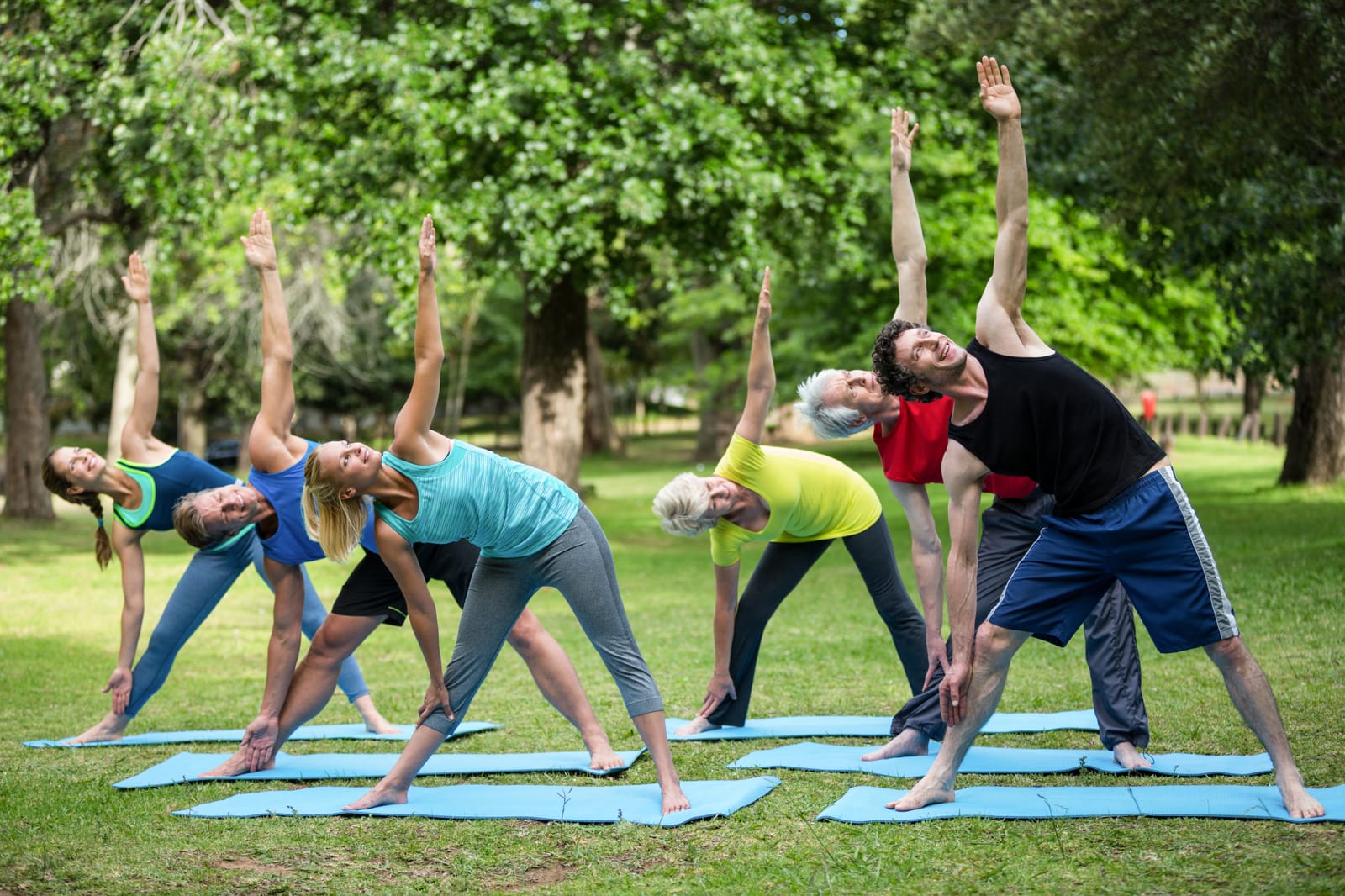
What about building strength? To build strength, you have to give your muscles resistance. That is why strength training is often called resistance training. Resistance training can be weight lifting or using weight machines. It can also be done without equipment with exercises like push-ups, etc. Yoga or Pilates can also be used to build strength. In these exercises, you hold a certain pose to keep muscles tight to build strength.
Building stronger muscles can protect your joints from injury as stronger muscles help joints stay in position. As we age, we lose some muscle strength but resistance training can slow the decline. It can also help keep your bones strong. Bones need resistance to stay healthy.
One exercise to rule them all
What if there were one exercise that offered the best results in the shortest time? While you can’t sit on your couch to get in shape, there is an exercise program that gives huge results with little time invested. Short-term, high-intensity exercise offers the best of both worlds. To get this benefit, you have to be willing to push yourself really hard for 30 seconds to a minute, and then slow down the pace for a minute, and then go full-speed again. This can be done using exercise machines or with traditional exercises such as push-ups. To get the benefit, do push-ups as fast as you can for 30 seconds, then rest 10 seconds, then do another exercise as fast as you can.
How your body changes when you exercise.
The human body is remarkably adaptable. Endurance training forces your body to adapt by improving the efficiency of the heart. Your heart learns to pump more blood with each beat. This is why endurance training lowers pulse rates when resting - the heart becomes more efficient. Also, blood vessels open up, which reduces high blood pressure. And, muscles learn to take in more oxygen and switch to burning fat for energy.
Repeated strength training makes muscles larger. The burning sensation in the muscles from exercise makes the muscle fibers themselves thicker and stronger. Also, the nerve signals that makes muscles work becomes more efficient at calling on muscle fibers. Also with strength training, bones become denser.
High intensity exercise changes your cells. Every cell has power plants that generate energy and high intensity exercise creates more power plants per cell. High intensity exercise also makes your cells better at building proteins. Proteins are what our body is made of. The blueprints for protein building are in our DNA, our genetic code. As we age, the protein building process has more trouble following the plans laid out in our DNA. But high intensity exercise makes your cells rebuild proteins like you were a youngster.
Where to get an exercise program
An easy way to start exercising is with the New York Times 7-minute workout. This is a workout that involves 12 exercise in 7 minutes. It involves Jumping Jacks, Wall Sits, and Push-ups followed by Crunches, Step ups, Squats, Bench Dips, and The Plank, ending with High Knee Running in Place, Lunges, Push-ups with Rotation, and Side Planks. You perform each for 30 seconds and rest a few seconds between each one.
There are many workout apps for phones or tablets. One app is Fit Star. It customizes a workout for your level. Another app is called Sworkit. They both offer simple video instruction. In both, there are free versions you can use to start and a paid version with more features.
Free online Fitness Blender videos are also a good option. These videos are easy to follow and make a great workout partner. Fitness Blender has hundreds of videos so you won’t run out of options. A good video to start with is the Fitness Blender 7-minute workout.
And don’t forget to spend time stretching. Stretching can take place in front of the TV, when you and your partner are watching your favorite program. Simply clear the floor and stretch for the first 30 minutes of the program. Muscles love to be unwound. We’ve all seen the big cats like lions stretch with great satisfaction. Think of yourself as a big cat, stretching those limber muscles.
Get started!
Now that you know how exercise can keep you young, do it! Try 10 minutes a day of intense exercise for 3-days a week1, and add in some walking. You will thank yourself.
Footnotes
-
You should always check with a health care practitioner before starting a new exercise program. ↩